21 Types of Patris for Ganesh Pooja
Ganesh Chaturthi is a time of devotion, celebration and tradition. One of the important rituals performed during Ganesh Pooja is offering Patris — sacred leaves and plants — to Lord Ganesha.
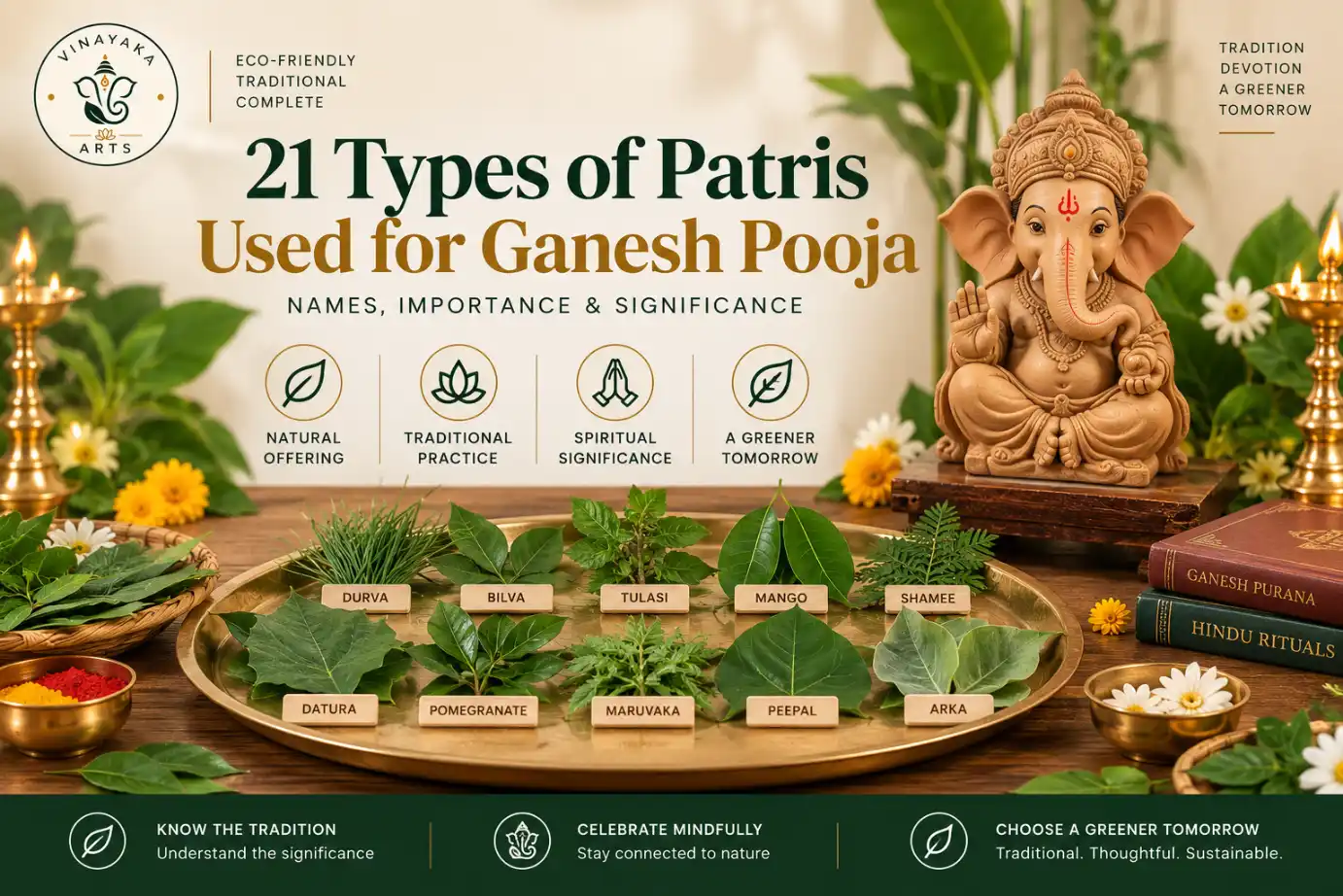
Traditionally, 21 different types of leaves are offered during the pooja. Each Patra has its own traditional name and significance, making the ritual an important part of Ganesh Chaturthi celebrations.
If you are planning your Ganesh Pooja, knowing the names and significance of these 21 Patris can help you perform the ritual with greater understanding and devotion.
What is Patra or Patri?
The word Patra refers to a leaf, while Patris commonly refers to the collection of sacred leaves offered during pooja.
The practice of offering leaves represents nature, purity, gratitude and devotion. Rather than simply being an offering, the use of different leaves connects the pooja with the natural world.
The 21 Types of Patris
1. Doorvaayugmam – Garike
Doorvaayugmam, commonly associated with Durva grass (Garike), is one of the most important offerings to Lord Ganesha.
Durva is traditionally considered especially auspicious for Ganesha worship and is commonly offered in bunches during Ganesh Pooja.
Traditional significance:
It represents purity, freshness and devotion.
2. Badari Patram – Regu
Badari Patram refers to the leaves of the Badari/Jujube plant.
These leaves are included in the traditional collection of 21 Patris offered during Ganesh worship.
Traditional significance:
The offering represents respect for nature and the traditional practice of using locally available plants in worship.
3. Duttura Patram – Ummetta
Duttura Patram refers to Datura leaves.
Datura has a long-standing place in Hindu ritual traditions and is used as an offering in certain forms of worship.
Traditional significance:
It represents the acceptance of offerings from nature and devotion beyond material value.
4. Devadaaru Patram
Devadaaru, traditionally associated with Deodar/Cedar, is another sacred plant included in the Patris.
Traditional significance:
Its inclusion reflects the connection between sacred worship and plants considered spiritually significant.
5. Bilva Patram – Maredu
Bilva leaves, known as Maredu in Telugu, are among the most familiar sacred leaves in Hindu worship.
Bilva is particularly associated with Lord Shiva, but it is also included in traditional collections of leaves used during Ganesh Pooja.
Traditional significance:
Bilva represents purity, auspiciousness and sacred devotion.
6. Karaveera Patram – Ganneru
Karaveera is commonly known as Oleander or Ganneru.
Its leaves and flowers have traditional uses in Hindu worship.
Important: Oleander is toxic if consumed, so it should be handled only as a ritual offering and kept away from children and pets.
7. Maachi Patram
Maachi Patram is one of the traditional leaves included in the 21 Patris.
The exact local identification of this plant can vary by region and traditional source.
Traditional significance:
Its use highlights the importance of preserving traditional botanical offerings in Ganesh worship.
8. Ashwattha Patram – Raavi
Ashwattha, commonly known as the Peepal tree or Raavi, is one of India’s most culturally significant trees.
It is revered in many Hindu traditions.
Traditional significance:
It represents longevity, sacredness and the deep relationship between spirituality and nature.
9. Apaamarga Patram – Uttareni
Apaamarga, commonly called Uttareni, is another traditional Patra used in Ganesh Pooja.
It has also been traditionally valued in Indian herbal practices.
Traditional significance:
Its inclusion reflects the traditional respect given to medicinal and naturally occurring plants.
10. Sindhuvara Patram – Vaavili
Sindhuvara, commonly referred to as Vaavili, is traditionally included among the 21 Patris.
Traditional significance:
It forms part of the sacred botanical collection offered to Lord Ganesha.
11. Arjuna Patram
Arjuna refers to the leaves of the Arjuna tree.
The Arjuna tree is also well known in traditional Indian herbal knowledge.
Traditional significance:
Its presence in the Patris reflects the traditional connection between worship, plants and natural resources.
12. Bruhati Patram – Vaakudu
Bruhati is traditionally identified with a plant from the Solanum group and is known locally by names such as Vaakudu in some traditions.
Traditional significance:
It is included as part of the traditional 21-leaf offering.
13. Daadimee Patram – Daadinamma
Daadimee refers to the pomegranate plant.
The pomegranate has long been associated with prosperity, fertility and abundance in various cultural traditions.
Traditional significance:
Its inclusion brings the symbolism of abundance and auspiciousness into the pooja.
14. Maruvaka Patram – Maruvam
Maruvaka, commonly associated with Maruvam, is an aromatic plant used traditionally in Indian households and rituals.
Traditional significance:
Its fragrance and natural character make it a meaningful traditional offering.
15. Devakaancana Patram – Tulasi
Tulasi is one of the most revered plants in Hindu households.
It is traditionally associated with purity, devotion and spiritual significance.
Traditional significance:
Tulasi represents sacredness and devotion.
16. Choota Patram – Mamidi
Choota Patram refers to Mango leaves, commonly called Mamidi in Telugu.
Mango leaves are widely used in Indian festivals and auspicious occasions.
Traditional significance:
They are associated with prosperity, auspiciousness and celebration.
17. Vishnukranta Patram
Vishnukranta is traditionally included among the 21 Patris.
The plant is also known in traditional botanical and herbal contexts.
Traditional significance:
It forms part of the sacred natural offerings made during Ganesh Pooja.
18. Jaji Patram
Jaji is traditionally associated with Jasmine.
Jasmine is widely appreciated for its fragrance and is frequently used in Indian worship.
Traditional significance:
It represents purity, beauty and devotion.
19. Gandaki Patram
Gandaki Patram is another traditional leaf included in the 21 Patris.
Plant identification can differ between regional traditions, so locally followed identification should be preferred.
Traditional significance:
It represents the offering of nature as part of Ganesh worship.
20. Shamee Patram – Jammi
Shamee, commonly known as Jammi, is a highly respected plant in Indian traditions.
It is associated with auspiciousness and is used during various Hindu rituals.
Traditional significance:
Shamee represents strength, protection and auspiciousness.
21. Arka Patram – Tella Jilledi
Arka, commonly known as Tella Jilledi in Telugu, is traditionally used in Hindu rituals.
Traditional significance:
It is considered an auspicious natural offering in traditional worship.
Why Are 21 Patris Offered to Lord Ganesha?
The offering of 21 Patris is deeply connected with traditional Ganesh worship.
It brings together different plants and leaves as offerings to the deity and symbolises:
🌿 Respect for nature
🙏 Devotion and gratitude
🌱 Connection with traditional practices
🪔 Purity and auspiciousness
🌸 The importance of natural offerings in Hindu rituals
The ritual also reminds us that worship does not always require expensive offerings. Nature itself provides many sacred and meaningful offerings.
How Are Patris Used During Ganesh Pooja?
During the pooja, the leaves are traditionally:
- Cleaned and prepared for the ritual.
- Offered to Lord Ganesha according to the pooja procedure.
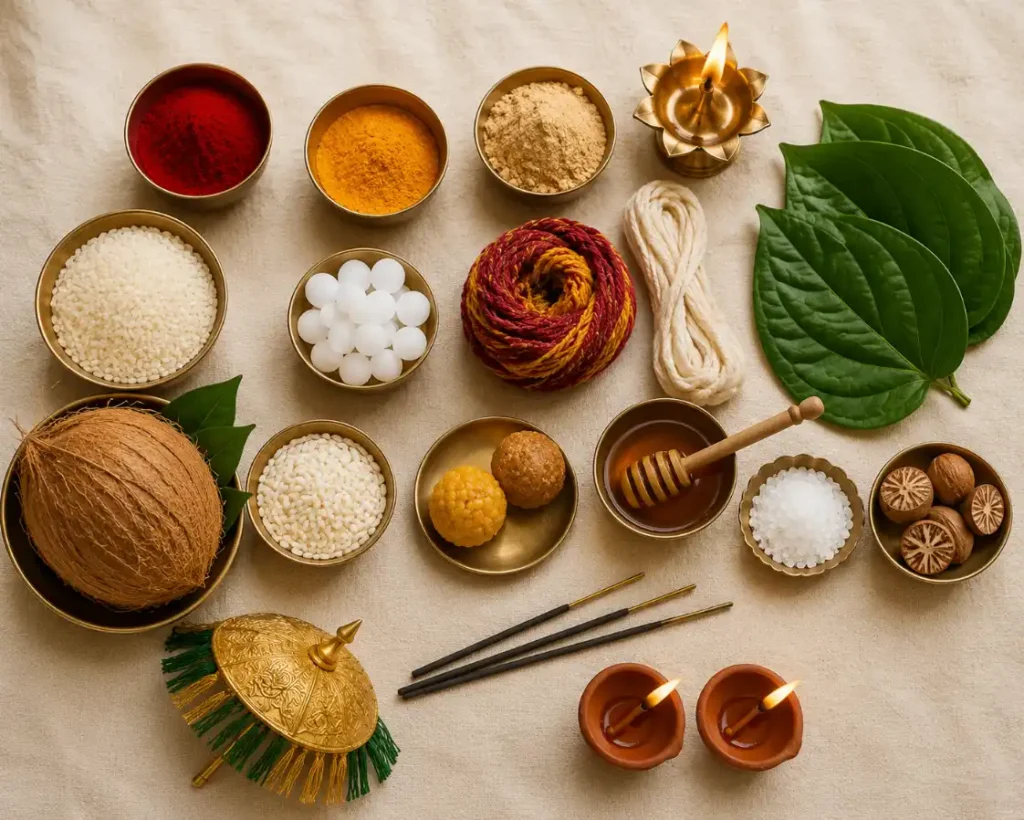
- Used along with other pooja samagri.
- Included as part of the traditional 21 Patra offering.
The exact procedure and order may vary according to regional and family traditions.
Why Buy a Complete Set of 21 Patris?
Finding all 21 types of leaves individually can be difficult, especially during Ganesh Chaturthi.
A ready-to-use Patris collection makes preparation easier by bringing the traditional leaves together in one convenient set.
At Vinayaka Arts, our pooja kit includes 21 types of Patris along with essential pooja items, helping you prepare for Ganesh Chaturthi with less effort.